Wednesday, 29 March 2017

5 Cheapest Destinations For Backpacking in India

Travel can be expensive but you if you want to backpack without spending much, here are the 5 cheapest destination to backpack in India. These 5 locations offer budget accommodations and the food isn't too expensive either.

5. Hampi


Hampi is an ancient temple town in located in Karnataka. It is a  UNESCO World Heritage Site which has some ruins of palaces, temples and many royal buildings.


4. Gokarna


Gokarna is a small town located on western coast of India in the state of Karnataka. It is one of the seven important Hindu pilgrimage site. Gokarna has beautiful and pristine beaches.

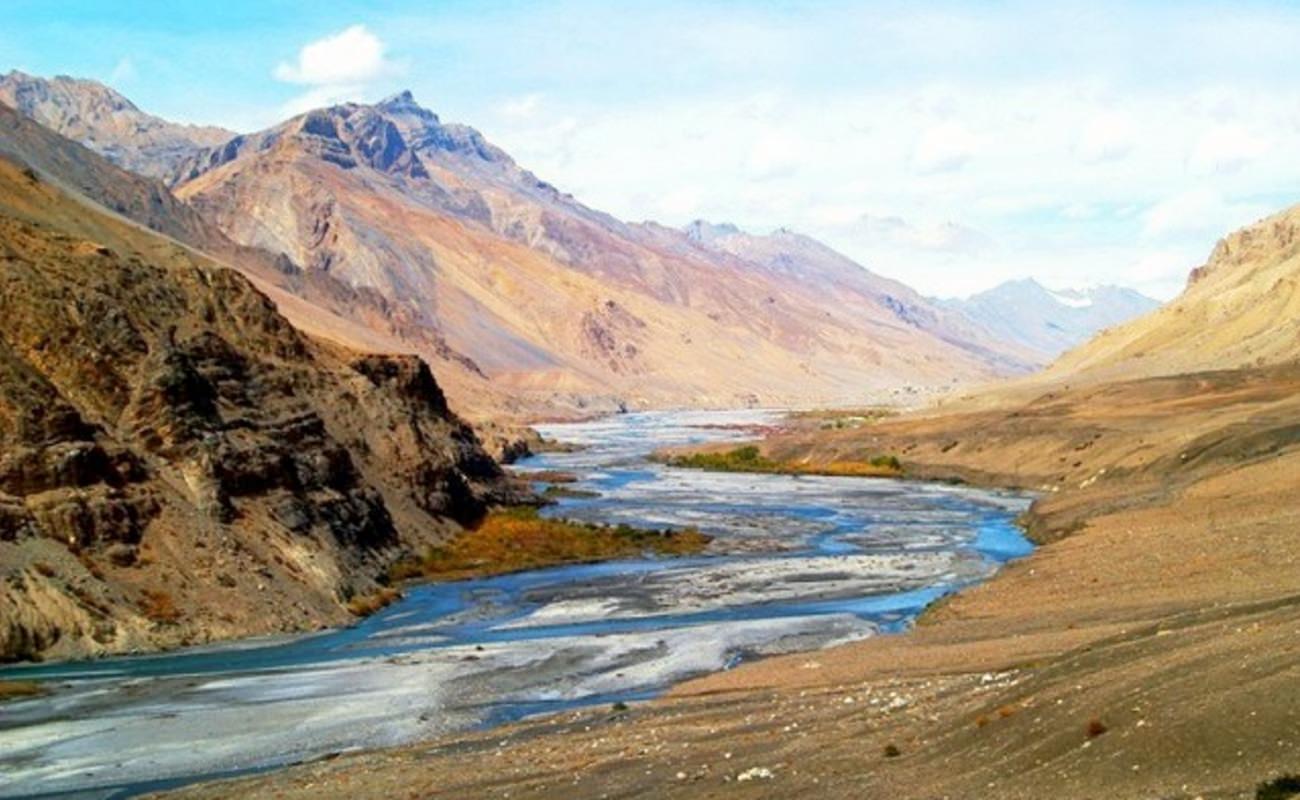
3. Spiti


Surrounded by picturesque Himalayan mountain range, Spiti is a remote valley in Himachal Pradesh. Its a good place for trekking and jeep safaris.

2. Jaisalmer


Jaisalmer lies in the heart of Thar desert,in the state of Rajasthan. Known as the Golden city, it stands on yellowish sandstone and is known for the magnificent forts and jain temples.

1. Dharamsala


Dharamsala is the 2nd capital of Himachal Pradesh. It is the perfect destination for nature lovers and also popular with the adventure lovers.

Friday, 8 January 2016

Dilwale is a blockbuster

The Badshah of Bollywood has a habit of emerging as the victor in all battles and so this time when the B-Town Trade Analysts are labelling his new movie Dilwale as an "above-average" film, the critics have used every word in the dictionary to run-down the film and the Right-wing protestors with all their might have opposed the film, King Khan has defeated his opponents yet again. We do not get the whole idea of a film's success just by comparing the box-office numbers with other films, only the analysis of the numbers can only reveal whether the film is a success or not. Below are a few points which clearly suggest that Dilwale is a blockbuster.

Number of screens:

December 18 saw the mighty clash between Superstar Shah Rukh Khan's Dilwale and Sanjay Leela Bhansali's magnum opus Bajirao Mastani. The first battle and the most important was that of the screens, Dilwale is said to be released in 2200 screens and Bajirao Mastani got 2000 screens. SRK's Red Chillies was distributing a film first time that too against a veteran like Eros, but the most intriguing thing was the distribution of the screens. It was obvious that Dilwale should get more single screens and BM should get more multiplexes but it was the other way round. Eros had signed contracts with single screen owners earlier and so BM got more single screens and Dilwale got more multiplexes. No one understood this masterstroke of Eros till second week when Star Wars released in India. Star Wars clearly had a wider release in multiplexes than single screens which led to more decrease in Dilwale's shows than BM. This move by Eros has had a great contribution to BM's lifetime collection.

The first weekend is the most crucial for any film's business. This year's highest grossing top two films were released in over 4000 screens and did superb business in the first weekend itself. Dilwale which only released 2200 screens on a non-festive weekend managed to earn 65Cr in 3 days. This number is huge if you compare it with Bajrangi Bhaijaan and PRDP's per screen collection. Dilwale also lost heavily because many shows were cancelled in 1st week due to protests. Therefore Dilwale did a phenomenal business in 1st week which is clearly the earliest indicator of a successful film.

Critics:

The world knows about the prejudice that critics have against Rohit Shetty films and as expected most critics gave negative reviews to Dilwale. While the audiences clapped,whistled and screamed at every scene and loved the film, the critics bashed the film in every possible way.

Bajirao Mastani is certainly a good film but critics clearly went overboard in their reviews. It is not that the critics were biased but film reviews are crucial when there is clash and movie goers are in dilemma to chose the film for the weekend. On the longer run it is the word of mouth that counts, Dilwale got a thumbs up from the family audiences because it is total entertainer and BM had the approval of critics. Poor reviews wouldn't normally affect such films but in this case of a clash, Dilwale suffered a dent in its collections.

Protests:

From comparing fan made posters of Dilwale with that of a Hollywood film, circulating fake plot of the movie and finally threats to theatre owners, Dilwale came across all type of hurdles. Over 900 shows were cancelled in the first week(most crucial) due to the protests by Right-wing groups and supporters of a major political party. The film had incomplete release in states of Gujarat, Rajasthan, Maharashtra, Madhya Pradesh and Karnataka. These centres are most important of any film, so Dilwale suffered loses due to this protests. The protests were so intense that a citizen was threatened with rape and murder as she opposed these protestor in Mangalore who protesting Dilwale. This fear prevented many people from going to the theatres. The most shocking thing was the silence of media and film fraternity on this issue. A censor approved filmed should be allowed to release but the governments did not take strict actions against the protestors. Certainly Dilwale is a huge success because it managed to earn 145Cr(3rd week India net.) inspite of the huge loses in key centres.

Final Verdict:

Despite facing such obstacles Dilwale has earned over 340Cr worldwide. Dilwale has smashed every record in UK, Gulf, Malaysia and USA. The film still hasn't released in some countries which have a considerable Hindi film audience. Dilwale earned USD 22.5 in just 17 days, and soon may break many more records. It already is the fastest 100Cr grossing film overseas. No trade analyst can argue against the fact that Dilwale has done stupendous business overseas.

To summarise, the SRK-Kajol starrer has successfully overcome every obstacle; it is an All Time Blockbuster overseas and a Super Hit in India. Overall Dilwale is worldwide Blockbuster and King Khan is still invincible!

Saturday, 6 June 2015

There are two sides to every coin...

"The highest result of education is tolerance."   -Hellen Keller
"A genuine leader is not a searcher for consensus but a moulder of consensus." - Martin Luther King, Jr.


One morning I woke up and following my routine picked up the morning daily, reading that newspaper was an unpleasant jolt. I was shocked to read a news article that was about parents protesting against the fee hike of the S.N.Kansagra School. The next few weeks this new routine continued. Everyday there would be a new article in the newspaper criticising and maligning the school where I had studied for 13 years. I was angry and frustrated, why were some few parents giving my school a bad name. While reading these articles I would always mumble, "If you have a problem with the school or the fees, just change the school, nobody is forcing you to stay in SNK. As simple as that." 

But everything is not that simple. After the continuous vehement protests by the parents I decided that I should also look at the other side of the coin too. I talked with one of the members of the Parents Association. All his arguments were genuine and correct. Although I personally do not support the means of their protests, but in a democratic country like ours, these kind of protests are common against politicians,actors,cricketers and in this case; a school trustee. This is controversy has been frequently discussed on social media but here I try to place both the perspectives together and discuss every argument point by point. Fortunately there are a few points on which everyone seems to agree upon. 


  • The quality of education that TGES provides, the facilities,infrastructure,management etc. are absolutely the best in the region. During the last 33 years, TGES has emerged as the number one educational institute. 
  • The above comes at a price, again which no one questions.
  • Fee hike is inevitable; just like every other commodities and services, a fee hike is bound to happen.
  • The implementation of RTE act by TGES is commendable.
If every one agrees upon the above mentioned points, what are the parents protesting about?

The Parents' Association:
  • Explain the need to increase the school fees by more than 10%.The school should come up with actual financial statements so that parents are convinced that the fee hike is genuine.
  • The school should explain what happens with the impress deposit money of 8000 thousand students. Where is that money used and what happens with yearly interest.
These are just a couple of points raised by the PA. The deadlock between PA and school management has lead to many other issues regarding uniforms, syllabus etc.
If there is an increase of 10,000 in a student's fee, it amounts to a whooping 8 crore if 8000 students are considered. The parents who are also the stakeholders of TGES have every right to know where this money was spent in the past 1 year. The PA claims that over 2000 parents have joined the association. The management can not afford to ignore the 25% parents who have trusted TGES. 

The TGES Management: 

  • The management has always maintained that the fee hike is because of the additional expenses in the past few years. A lot of money has been spent for a world class infrastructure for TGES.
  • The management decided that parents who are important stakeholders of TGES, should decide how the institution would be managed in future by a simple process of voting.
I haven't seen any other school that has adopted such democratic and transparent process and given all the decision power to the parents. The TGES call centre has been open to solve all queries that parents may have. The management has also communicated the views of the trustees on its website. Over 33 years, the trustees have managed to run the school smoothly and taken education to a next level. 

The Deadlock:
The Parent's Association is not convinced by the fee hike justification by the management. Kiran Bhalodia who is one of the seven trustees has been the face of TGES all these years. Kiran sir has always explained the TGES mission to all the parents. He is not only the trustee but a role model to all the students. Parents have always trusted Kiran sir and therefore the PA wants to talk to Kiran sir rather than the employees of TGES.
The PA decided not take part in voting because it felt that it had no intention of managing the school or changing the way of management. PA only wants the answers to the numerous questions they had raised. While the PA decided to boycott voting, TGES went ahead and announced the entire voting process. PA went to Gandhinagar and after talks with the government, the government decided to stop the voting process. Subsequently TGES announced that the voting process has been stopped after it received notice from DEO. 

While publishing this article, a new circular has come out stating that the fees could be reduced and the uniform issues will also be addressed.
http://www.tges.org/TGESCircular6JuneAnoteonfeesuniforms.pdf

This entire issue became more controversial as the protests of parents were unacknowledged and hence the media became more active which lead to further outrage and support for TGES. The alumni and students supported the management by their posts on internet while the PA went out on streets raising slogans and sticking posters around the town. When people start taking sides, the rift only widens, one of my motive to write this article is to bridge the gap between the two parties. 
The latest circular from TGES which has been mentioned above seems very promising and looks like the issue will be solved quickly and the new academic year 2015-16 will begin as announced.  
Nobody wants this controversy to continue but if still the issue remains unsolved, then the parties would have to solve this matter in court. We all hope that this issue is not dragged to the judiciary but if it is then 'Truth Alone Triumph' . #BeWithTGES or #SupportThePA ........ #SatyamevJayate 

Saturday, 11 May 2013

The Importance of Indian Captains in IPL

There is a reason why IPL is spelt with an 'I'. The big stars are roped in, the celebrities make an entry and the cheerleaders try their best to drag our attention away from the action. At its core though, it still is a platform to let local players mingle with the big stars from other countries. India's international commitments have made it impossible for their top players to participate in the Ranji Trophy. The IPL ensures that local players get to share the dressing room with their idols - cricketers whose posters have adorned their walls in their formative years. An Indian captain for each IPL franchise would have been the icing on the cake. That hasn't quite transpired, though.
Rajasthan Royals, because of their lack of resources, handed the reins to Shane Warne, a tactical genius, an astute student of the game and a charmer. Soon, Kings XI Punjab followed suit, handing Kumar Sangakkara the baton, a move that perhaps adversely impacted Yuvraj Singh's returns in the IPL.
IPL 2013 has an interesting mix. Chennai, Rajasthan, Kolkata and Bangalore went for Indian captains. Delhi, Pune, Hyderabad, Mumbai and Punjab went for foreign options. The message was loud and clear from the team owners: local players don't possess the tactical nous and ability of the foreign players. Interestingly, the Indian captains have outperformed their foreign counterparts. Mumbai Indians turned it around midway with Ricky Ponting dropping himself, allowing Rohit Sharma to take over. Coincidentally, the team has responded with three wins in four games. Delhi, Pune and Punjab are languishing on the wrong side of the table. The results perhaps don't say much about the abilities of the respective captains, but there are a few points worth delving into.
One reason why captaincy is an important consideration is the mix of players - four foreigners and seven Indians per XI. Most squads have a huge Indian contingent, so you'd expect communication channels to work far more smoothly with an Indian at the helm. Given the professional grounding that the foreign players already have, they would find it easier to work with an Indian captain compared to local players having to deal with foreign captains. Players will always respond better to a captain who can pronounce their names perfectly, no offence given or taken.
All the teams have huge contingents for man management and planning. In such a scenario, the captain's job doesn't really imitate the pressure-cooker situation of international cricket. The IPL is a great opportunity to groom leaders, and a wonderful testing ground of their maturity. Bangalore did that by handing Virat Kohli the captaincy, instead of taking the easier option of going with AB de Villiers. Perhaps, a lesson was learnt when Anil Kumble swung their fortunes around after a disastrous start to the 2009 campaign under Kevin Pietersen. Kohli commands the respect of his team on the strength of his batting and fielding. What he lacks in experience, he makes up in flair and passion. De Villiers and Chris Gayle aren't too far for a quick word either. Surely in years to come, the heir-apparent to Indian captaincy will ruminate upon the lessons learnt in the IPL.
Mumbai took a bold step with Rohit at a crucial juncture and it seems to have paid off. Had Ponting been more successful with the bat, we wouldn't have seen Rohit in this role. Mumbai have got into a winning run under him, and Rohit's batting has also blossomed.
With Shikhar Dhawan back from injury, perhaps the Sunrisers should've considered him as a captain. Neither Cameron White nor Kumar Sangakkara has consistently figured in the playing XI. With Angelo Matthews standing down as Pune captain, it might be a good idea to give Yuvraj another run to see if he can rediscover his batting touch. Of all the teams, Delhi is the only one that probably has no choice, Virender Sehwag being reluctant to lead.
The IPL is at an interesting point in its evolution. The third auction will initiate a new round of shuffling, with players changing colours and loyalties. What the IPL has lacked so far is the long-term fan loyalty that is seen in football. Chennai and Mumbai have the most loyal fan following - helped by the fact that they retained more players than any of the other franchises in the first reshuffle. Perhaps there's a message there for the other franchises.
An Indian captain will find it easier to get the best out of the Indian contingent, and will also get the crowds going. Additionally, he will definitely fuel fan loyalty. Even if one wants to be a die-hard fan of the Delhi, for example, it is hard to not support RCB led by a Delhi lad when pitted against Jayawardene's Daredevils.Krish Sripada, India

Friday, 12 April 2013

Why the IPL can't be much more than a launch pad?


In recent days I have had the opportunity to watch Ashish Reddy, Hanuma Vihari, Manan Vohra, Rahul Shukla and some others whose existence television only sporadically acknowledges. If you've looked at scorecards of domestic cricket, you know the names, but you probably only know them merely by the numbers they generate. The IPL allows you to see them, it gives them a platform, and that is one of the reasons I look forward to it every year.
A couple of years ago Saurabh Tiwary told me that he scored a lot of runs for Jharkhand but nobody knew him. He made a couple of thirties for Mumbai Indians and suddenly he was being talked about. It put him in the Indian squad and in the IPL auction. He may have had a financial windfall but it didn't do too much for his future in Indian cricket; he remains, at best, a fringe player. At least at this stage. It tells you a bit about the IPL.
What the tournament does give you, and give you better than anything else in international cricket at the moment, is a stage and an opportunity. It doesn't give you too much more, but if you are a young man, you should be willing to give anything for that much. Some take the opportunity, others don't. Some believe the opportunity is the pinnacle of all they ever wanted to do, others think it is the beginning of life in another world. But it doesn't guarantee you anything, often not even a spot in the Ranji Trophy, as Paul Valthaty and Manvinder Bisla discovered. And as Tiwary now knows, the reputation you acquire in the IPL doesn't count for too much in the Ranji Trophy either.
And an IPL match is like an episode in a long-running soap. You don't want to miss the action as it unfolds, but people remember only bits and pieces thereafter. You can therefore trend on Twitter for a day, maybe be talked about for another week, but that is it. Arun Karthik knows it well. A six off the last ball for the Royal Challengers in the Champions League made him an overnight hero but that was it. It isn't like being in a feature film, where a blockbuster performance is remembered for years - that is the equivalent of a Test hundred.
The reason I am saying this is that people either give the IPL way too much importance or seek to get noticed by trying to knock it off its pedestal. Neither is right. The IPL is not a certificate of performance in other forms of cricket. We saw that with Swapnil Asnodkar, with Valthaty, with Manpreet Singh Gony, with Siddharth Trivedi. It is merely an opportunity that you have to take again and again. It doesn't make you a good first-class cricketer - that is a different game. It makes people look out for you, but that is about the only advantage, even if a significant one.
It helped cricketers liked R Ashwin and Ravindra Jadeja, because they used the stage to draw attention towards themselves. They didn't make it in first-class cricket, and thereafter in Test cricket, because they were good in the IPL. They did it because they bowled hundreds of overs when very few people were watching, and perfected their craft. They became ready elsewhere and used the IPL as an opportunity to announce themselves to the world.
That is how I believe the IPL must be seen. As an event that celebrates a specific ability and at a specific moment in time. People who cannot, or are unwilling to, put in the hard yards in four-day or five-day cricket remain IPL specialists. This isn't only true of those like Mayank Agarwal or Bisla but of others like Tirumalasetti Suman, and for that matter, Munaf Patel.
As the IPL gets a greater share of national sporting attention, and as sponsors eye the various price points available to them to claim association, I hope young players don't look at it as the only cricket in their lives. They could do that if, like European football leagues, the IPL ran for six months. But it doesn't and so I hope they use it to draw attention to their skills. If they play four-day cricket, I believe they will extend their T20 career. If the shortest form is all they play, it could lead to a short career.

-Harsha Bhogle for ESPN

Tuesday, 26 March 2013

Mr Cricket-N Srinivasan


Well,I'm not talking about MSD, Mr.Cricket here is referred to Narayanswami Srinivasan, the President of the BCCI(Board of Control for Cricket in India), and also the owner of India Cements which owns the most successful team in IPL.After Srini was appointed the President,Within seven months, the BCCI constitution was amended to change the clause that had stipulated that no administration or member should have any commercial activities of the board..Chennai Super Kings has performed exceptionally well in the past tournaments, 4 of India's National team also represent CSK.The captain of the indian team is the vice president of india cements. The owner of CSK and the President of BCCI is the same person,this makes the scenario smell fishy.

Tamil Nadu Government has banned SriLankan cricketers in Chennai.So instead of moving home games away from Chennai, no SL player will play in Chennai.Chennai have just two SL players who are not their lead players, but for other teams SL Players are very important.
No Malinga vs MI, No Mahela vs DD, No Dilshan vs RCB, chennai will have pretty easy home games.This decision will affect other franchises more than Csk.Let us not forget, the actual problem is of CSK but other teams will suffer. This is pure injustice and maybe it is the Srinivasan effect?

Sunday, 24 March 2013

Chennai Super Kings out of IPL 6 ?

The most successful team of the Indian Premier League - Chennai Super Kings has many Srilankan cricketers(Nuwan Kulasekra,Akila Danajaya) and the other teams too have Srilankans in their sqauds.The inhuman treatment to Tamils in Sri Lanka has caused great protests in Tamil Nadu agaisnt Sri Lanka.The DMK MPs have resigned from the UPA Government.The protesters are wanting to stop the entry of SriLankans in Chennai and have asked the BCCI to prevent the entry of Srilankas in Chennai or the CSK's home matches could turn violent.BCCI is thinking to change the venue from Chennai to Ahmadabad and Rajkot.But the insiders say that the CSK team is reluctant to change its home ground.If there is deadlock between CSK and BCCI, we may not see Dhoni and his Boys on the field, which is very unlikely because President of BCCI is the owner of CSK.There has already been the controversy between Rajasthan Royals and The Rajasthan Cricket Association, and other controversy regarding the name of the Pune Stadium. IPL6 is controversial even before its grand start on 3rd April at Kolkata. 

Sunday, 17 March 2013

Why Iphone still dominates?


You've seen the specs: a 5-inch screen with 441 pixels per inch, 1080p display, a quad-core 1.9GHz processor and a 13-megapixel camera. Feature for feature,Samsung's next-generation Galaxy S4 has the iPhone beat.
But just two days after the S4's launchApple released a webpage explaining why its flagship smartphone is better than the competition.
"There's iPhone. And then there's everything else," the page's headline blares. Apple goes on to cite all the reasons why its phone is "unlike anything else," some of which are listed below:
  • The iPhone has received eight consecutive J.D. Power and Associates awards for customer satisfaction with consumer smartphones.
  • Only the iPhone and other Apple products have Retina display.
  • The iPhone has a long battery life — including up to eight hours of talk time — while maintaining a "thin and light design."
  • The iPhone has "ultrafast" wireless and LTE.
  • Only the iPhone and other Apple products have access to the iTunes Store and the App Store, which offers over 800,000 apps. What's more, they are all reviewed by Apple to protect against malware.
  • Only the iPhone has Siri, the intelligent personal assistant.

Thursday, 7 March 2013

Is there some magic left in Sehwag yet?


In many ways, it was inevitable, and yet it hits you like one of his many shots over the years. Looked at coldly, devoid of emotion and without looking at the past, Virender Sehwag's omission was predictable. The runs had dried up, the rope he had been given was long enough. But the realisation that the thrill you felt within as he walked out to bat will be absent creates a longing. Sehwag kept you on the edge of your seat, he made you look forward to the next moment. He was good for cricket and he was good for India, and we don't know if he will play for India again. He has been a mighty cricketer and he will stroll easily into a room reserved for the greats of Indian cricket. Without a doubt.

-Harsha Bhogle for ESPN
But hang on, is this starting to look like a retirement tribute? There is a part of me that wishes it isn't, and there is another that fears we may not see him again. There is much stacked against him. Over the next 24 months India visit South Africa, New Zealand and England, against each of whom he averages under 30, and Australia where fifteen months ago he scored198 in eight innings. India play away more than they do at home in this period. Of not inconsiderable importance is the fact that among the youngsters tried out in recent times, Cheteshwar Pujara, Virat Kohli, Ravichandran Ashwin, Ravindra Jadeja, Umesh Yadav and Bhuvneshwar Kumar have all shown acceptable levels of promise and performance. Now Murali Vijay has got a big hundred too. The temptation to look at a younger man has been rendered stronger.
His chances of being picked for Mohali and Delhi would have resided in the hope that India's selectors wouldn't want to change a winning combination. I have heard that thought expressed many times and, quite frankly, have been baffled each time. It suggests that if the team is winning, it should be happy to carry along those that are not good enough anymore. No team should ever be picked on such a basis, for in the course of time everyone will then be entitled to be selected, even if they aren't delivering. Sehwag had to be picked based on his performance and not on that of the rest.
I suspect this omission is also an indicator that Sehwag will not be opening the batting in South Africa this November. If he was to, he had to be retained, but quite clearly the thinking is that the next in line must feel at home playing for India before playing an away tour. In logic, it is sound. But sadly for Sehwag, it is a tricky time to be dropped because the domestic season is over and there will be little Ranji Trophy cricket by November. To force his way back he needs games and those are not available in India.
So if it seems that the opening berth is now sealed (remember Gautam Gambhir will be in line for a comeback too), is there another option? And here the picture seems a touch rosier. Sehwag hasn't ever held back from saying that he wants a spot in the middle order. A couple of years ago, when he was in peak form, I interviewed him after he received an ESPNcricinfo Award. "Surely you accept that you are now an opener?" I asked. "No, I am No. 4…" he started. "But No. 4 is not leaving in a hurry," I said with a smile, eager to see his reaction. "No problem, I will wait." he said.
We don't know how long "No. 4" will play, for fitness will become a concern as time passes, but if for some reason Sachin Tendulkar is not on the flight to Johannesburg, India may not have a single batsman in the top six who will have played more than 20 Tests (on the assumption, of course, that Dhoni will be No. 7 on those tracks). Sehwag at No. 5, below Pujara and Kohli but above Ajinkya Rahane or Manoj Tiwary or another at No. 6, might be tempting for the selectors.
Much, of course, will depend on Sehwag's will to continue; and its translation into a rigorous fitness regime. Players like Ricky Ponting, Rahul Dravid and Michael Hussey were extraordinarily fit as 40 loomed, and VVS Laxman's great discipline and skill kept him going. Can Sehwag recall the hunger, and that extraordinary ability for hard work, again?

Wednesday, 20 February 2013

You need the Kumbles and Dravids, not just the Tendulkars.


In a country of over a billion people, talent ought to be as common as table salt. Why fuss over it? Especially talent in cricket - synonymous with sport in India, and hence intensely followed and widely played.
Clearly, though, that isn't the case, for had talent been so common, India would have been churning out prodigies all the time, sitting secure as Test No. 1, and ruling the other ICC rankings tables for decades together. Perhaps that's why talented cricketers are so revered - and rightly so. Rohit Sharma finds himself in this hallowed club, protected and persisted with to fortify his "god-gifted talent", as MS Dhoni puts it.
In a sense, Rohit's talent has even superseded the intangible yet highly consequential yardstick of form, the lack of which is often responsible for a player being dropped from a team.
But isn't talent as intangible and indefinable as form? Talent means a special natural ability or aptitude, but who is to judge if that ability is special or everyday? Wouldn't the answer be highly subjective? Our judgement of talent is often based on preconceived notions of what constitutes it, and thus of who is "talented".
For instance, Sachin Tendulkar has been widely recognised as talented, but in comparison, but not many would say the same for Anil Kumble - at least they wouldn't say that he was talented in the same measure as Tendulkar. Does that make him less talented?
From the beginning Tendulkar displayed special skills to successfully deal with all kinds of challenges thrown at him. He could do things others couldn't. He always seemed to have enough time to play the fastest bowlers on the fastest pitches. He had more than one stroke for every delivery. His timing and balance were superior to those of his peers, and above all, he had the ability to keep the good balls out and punish the bad balls consistently.
He had more time because he could pick the ball a fraction earlier, which allowed him to get into the right positions before the ball arrived. He had more strokes because he had supreme control over his bat's movements, and the extra time he had made that possible. His timing was also a gift, for he always knew precisely when to bring the bat down at the desired speed and angles. His ability to keep the good balls out, though, was not natural but nurtured.
On the other hand, Kumble, who made his debut a year after Tendulkar, was first considered the antithesis of what a talented player should be. Unlike Tendulkar, who was marked as a "special talent", Kumble fought a constant battle to prove people wrong, for legspinners of his type were not supposed to succeed beyond a point. The preconceived notions about talented legspinners were to do with their natural ability to get loop, drift in the air and vicious turn off the surface. Kumble ticked none of these boxes, for his height and high-arm action didn't allow him to create loop, nor did he spin the ball off the surface. He relied on unbelievable accuracy and subtle variations to create deception.
 
 
In Kumble's or Dravid's case, not only did we fail to assess their talent fairly but we were also as quick to discredit it. What they possessed didn't match our understanding of talent
 
The jury could be divided on whether Kumble qualified as talented or whether his success was the result of sheer hard work. Even Rahul Dravid was rarely considered talented in his early days, for our notions about talented batsmen often have to do with flair and panache. The dogged approach to blunting an attack for sessions on end isn't what talent is all about - or so we are made to believe.
This is not about whether Rohit is talented or not. That, again, is a personal perception. The point I am making is simple - whether someone is permitted to or prohibited from making the cut shouldn't solely depend on our understanding of his talent, for our judgement of it could be skewed.
Tendulkar, the most gifted of cricketers, also became one of the most successful through hard work, not talent alone. An abundance of talent cannot automatically discipline the mind to be selective, which is a crucial quality.
While greatness can have a touch of predictability and boredom to it, because it can't be achieved without a little bit of self-denial, talent is seldom boring, because it allows you to do things others can't fathom.
Not only that, Tendulkar, with all his talent, needed to keep evolving as a batsman to remain one step ahead of the opposition. He wasn't the most technically correct player when he started out. He used to lean on his bat in his stance, which resulted in his head falling over and made him play across the line. He knew that to complement his talent and make the most of it, he needed to keep working on those little chinks in his game.
Over a period of time, the most talented batsman also became the most technically correct batsman. Talent put Tendulkar on the right path and his discipline took him to his destination.
The popular judgement of talent, in Tendulkar's case, was accurate, and fortunately he proved us right too. But in Kumble's or Dravid's case, not only did we fail to assess their talent fairly, we were also quick to discredit it. What they possessed didn't match our understanding of talent. They didn't have the flair (though they had the ability to concentrate for long hours). They didn't have two shots for the same ball, or a delivery that turned a lot, but they had the ability to be consistent in their approach. That is talent too.
I grew up with many cricketers who were considered far more talented than I was, but most of them didn't even get to first-class level, let alone don the India colours. You might be justified in giving more opportunities to players at the junior level who are perceived to be talented, but we must acknowledge that talent doesn't always translate into success and that our understanding of talent can be slightly warped at times.
One may be tempted to give talented players a longer rope, but there's no guarantee that they'll turn out to be successes. Vinod Kambli, at one time, was considered more talented than Tendulkar.
It's imperative to ensure, especially in a team sport, that players who are considered less talented aren't given a rough deal in order to promote a talented player. It's tempting to find another Tendulkar, but that shouldn't mean that the Dravids and Kumbles aren't given a fair run.

Source: Akaash Chopra, ESPN Cricinfo

Friday, 15 February 2013

What's with India's don't-win-but-don't-lose attitude?

The country's cricket, at all levels, is suffering because of players' reluctance to challenge themselves.

As I watched the last day of the Irani Cup unfold, completely inconsequential, and devoid of a challenge, I wondered what it is about our cricket system that encourages so many teams to play safe, to believe that getting the first-innings lead is all that matters. It bothered me - and I hope it bothers a lot of people - that a higher sporting goal, that of winning the game outright, seems to be so low down the priority of most teams.

Among the many responses I got on Twitter when I posed the question why, one came from Anand Halve, among India's foremost marketing analysts. "Do you think 'It's ok if you don't win but don't lose' is a reflection of a national mindset that goes beyond cricket?" he asked, and being the analytical sort, promptly followed it with another: "The Minimax vs Maximin criterion as a motto for living?"

The definition of Minimax in game theory, simplified, is (courtesy Wikipedia): "… each player minimises the maximum payoff possible for the other - since the game is zero-sum, he also minimises his own maximum loss (i.e. maximises his minimum payoff)."

At the start of day five of the Irani Cup, Rest of India were 413 ahead with 90 overs left in the match. Remember, it was a last-day pitch, and except on day one, a run rate of four an over hadn't been reached. You would have thought 4.5 runs per over would have been not only a safe enough challenge but also one that would have given their bowlers the best opportunity to take ten wickets. Instead, they batted on and set Mumbai 517 from a maximum of 67 overs.

When I asked Harbhajan Singh, the Rest of India captain, if he had contemplated a declaration overnight, he suggested that on a track like that, they didn't want to offer the opposition a chance. He was minimising the maximum payoff possible for the opposition (to win the game by chasing 413 on the last day) but also maximising his minimum payoff (to win on first-innings lead). In this case, aiming for his maximum payoff, winning outright, would have been excellent for cricket, would have given his bowlers something to play for on the last day, and would have thrown the gauntlet down for the Mumbai batsmen, who would have had no choice but to go for the target, since otherwise they had lost the game on first-innings lead.

And so we had another day of low-pressure, low-challenge cricket, which, as it turns out, is ingrained in India's domestic structure. The idea of challenging yourself to discover how good you can be is unfortunately considered outdated, unfashionable or just stupid. Which is such a pity.

To go back to Halve's question: is this a national trait, to effectively do just enough to get a favourable but sub-optimal result? And is this reluctance to take pressure reflected in a fragility that is manifest when pressure is inevitable? It is for the social scientists to examine whether this is a national trait, but on the evidence of a little bit of research, I have to conclude that it is an overwhelming feature of Indian cricket.

Let's start at the top and the now infamous Test in Dominica in 2011. India, leading the series 1-0, had to make 180 from 47 overs to win. Their worst-case scenario, a defeat, was remote. By the time they moved to a target of 86 from 15 overs, with seven wickets in hand, it had disappeared. India could either draw or win. They chose to draw rather than challenge themselves to win. The result was favourable (a series win) but sub-optimal (1-0 instead of 2-0). It suggested India didn't want to be pushed.

One level lower, we saw the mindset in the Irani Cup. Even more unfortunate was Mumbai's approach in their Ranji Trophy match against Gujarat. Needing 135 from a minimum of 41 overs to seal an outright win, Mumbai opted to dawdle to 65 for 1 from 27 overs, with opener Kaustubh Pawar scoring 15 not out from 88 balls. If you love bright, attacking cricket, you would have been particularly pained by the statement by the Mumbai coach: "It wasn't really going to matter eventually - whether we went for the target or not. The fact is, we have achieved the objective of qualifying." Mumbai allowed themselves to play dull, purposeless cricket instead of challenging themselves for a superior cause.

Go lower and at Under-16 level you have a similar attitude. It is inevitable, for youngsters to be looking at what senior cricketers do. Sample this from Mumbai v Jharkhand in the Vijay Merchant Trophy quarter-final. Mumbai made 360 and bowled Jharkhand out for 46. Facing a seemingly inevitable innings defeat, Jharkhand found themselves fielding again while Mumbai made 440 for 9, a lead of 754. They then left Jharkhand around 33 overs of batting. The moment Mumbai's lead went beyond 450 or 500, there was no competitive interest left in the match, and the only purpose was generating numbers - statistics that would look good on paper, batting averages. What you didn't get was a contest that would make those numbers relevant.

Worse still by batting on, you are looking at generating batting numbers rather than allowing bowlers to win the match in the fourth innings. By the time the bowlers are given their shot, there was no competitive element left in the game. How do you produce attacking bowlers who can win you a game in a 50-50 situation on the last day if they don't get the practice to do so? By minimising the maximum payoff possible for the opposition, teams, and therefore Indian cricket, lose out much more in the long run.

From time to time, the technical committee of the BCCI has tried to make winning outright more attractive than winning by merely achieving a first-innings lead, but committees cannot change mindsets that have been ingrained over generations. Till the mindset changes to one that rewards winning, India will have to live with batsman-dominated-but-largely-uncompetitive cricket.

Minimax might be a good concept in some business situations, even in some sports, but it is harming Indian cricket.

By Harsha Bhogle for ESPN.

Wednesday, 13 February 2013

The problem with women's cricket in India.


It's not played by schoolgirls, so where will the talent feed for U-19 and state cricket come from?

Walk into any school in India and you will see a group of boys playing cricket, organised or not, in the playground. Have you ever seen girls playing instead? My guess is no. Here lies the starting point for any story about Indian women's cricket.
Women's cricket has travelled a long distance in the country - from its beginning under the Women's Cricket Association of India (WCAI), when players had to pay to play tournaments, to now, when Indian girls have travel and accommodation expenses paid for, receive a match fee and a daily allowance. The game is run by the BCCI these days and that has led to many benefits, but there are still areas in which the WCAI, women cricketers will tell you, did a better job.
"Girls played many more domestic and international games, but now things have changed drastically," says one disgruntled player. "The Indian women hardly play any international matches, and the number of domestic tournaments has reduced considerably."
For women's cricket to develop and grow, the BCCI and state associations must increase participation at the grassroots level. I played state cricket for Hyderabad and I can tell you that for women's cricket, the grassroots is tough terrain.
Most boys begin playing cricket, unofficially or officially, when they are ten or 11 years old. They have the opportunity to play for their school (sometimes the school even has "inter-class" matches) or district, and soon enough get the chance to represent the state. At the school level, girls in India have practically no opportunity to play cricket.
Women's cricket in the country is simply divided into two categories, Under-19 and seniors (state/Ranji Trophy level). There are no school or club matches that help selectors pick at the U-19 level, so a player only gets to play matches if she is considered "good enough" to be selected in the state team. Most girls who graduate from U-19 make it to the senior team, but those who don't usually give up the game.
This lack of opportunity is the biggest concern for women's cricket. "If girls aren't given the chance to play more matches, our standards will never rise," says Sunitha Anand, a wicketkeeper from Hyderabad, who was part of the Indian team that won the Twenty20 Asia Cup held in China last year. "You only find out how much you have developed as a player when you play in a match. Nets can take you only so far; matches are what really count."
She says schools must be encouraged to have girls' cricket teams as well. "When more girls play, competition will increase, and as a result, standards will rise. It is only when you are competing for something that you continue to get better. When you know there is no one pushing for your place, you tend to stagnate."
For young girls who want to start playing cricket, finding a proper coach or an academy becomes the next hurdle. I know of many girls who had trouble in this regard; this when every neighbourhood in India seems to have a "cricket academy". The truth is that many academies don't accommodate girls, and therefore there are very few places where girls can be coached.
A nine-year-old who wanted to play walked into the Arshad Ayub Academy. The coaches looked at her uncertainly, saying she was too young and probably would not settle in well with the boys. She insisted, "I'm better than the boys. I'll show you. I want to play"
In 2007, three girls I know who had already represented one southern state were turned away by a coach who said he had "no time to train girls". A nine-year-old who desperately wanted to begin playing cricket walked into the Arshad Ayub Academy. The coaches looked at her uncertainly, saying she was too young and would probably not settle in well with the boys. She insisted, "I'm better than the boys. I'll show you. I want to play." Rachna Kumar, now a member of the Hyderabad Senior team, thus became one of very few girls to gain admission to such centres.
If only more coaches were willing to allow the girls to play with the boys. There would be such an improvement in the women's game, and I honestly believe more girls would begin to play.
"I have a lot of friends who want to play cricket just for fun," says Kumar. "They don't want to take it up seriously, so joining the women's academy in Gymkhana [Hyderabad] would be pointless, but then again, there is nowhere else they can go. It would really help if there were other places where girls could learn to play recreational cricket, even if they aren't serious about it."
For those girls who do end up playing for their state teams, life is not much easier. The practice facilities provided are reasonably good, but when it comes to playing practice matches, the available grounds tend to be very far away, because the centrally located grounds tend to give priority to the boys' teams. Sometimes parents have to take the day off to make sure their daughter has a safe ride to the venue.
Many of these grounds, located almost on the outskirts of the city, don't have proper toilets - if they have them at all. Some have bathrooms without doors, some without running water, others with broken commodes. There have been times when, in order to use a bathroom, players have had to walk over to a nearby shopping mall or theatre. "Girls know nothing of 'comfort breaks' - the grounds we play on train us not to take them," says Anand.
Women's cricket in India is still not a fully professional sport - meaning one can neither make a living from it nor find financial support. Match fees and the daily allowance (for a five-match tour) together probably cover the cost of a good bat. Quality gear comes at a price - approximately Rs 10,500, excluding the bat, which costs around Rs 10,000 for a good one.
Most of the boys who play for the state at junior level have sponsors who hand out free equipment. If you grow in stature and play at the Ranji Trophy level, these commercial contracts sometimes provide an income as well. Girls, on the other hand, even the ones who play for the country (let alone the state players), find it difficult to get sponsorship for their gear.
Women's cricket in India needs to grow, and for that it's important that more girls are given a chance to play in school. When a team does well and wins, interest is generated. That's exactly what has happened with women's badminton in India, thanks largely to Olympic bronze medalist Saina Nehwal. That is what happened with men's cricket after 1983.
Hosting a World Cup is great for the exposure it gives women's cricket, but more needs to change - encouraging girls to play at schools, opening up academies to girls, and ensuring that the real change for the women's game takes place, not with a World Cup every few years, but at the grassroots.

Monday, 11 February 2013

iCar-A Steve Job's Dream


Apple's visionary co-founderSteve Jobs' final ambition before he died was to see Apple to dominate the roads with its 'iCars'.
According to a report byBusiness Insider, the co-founder and CEO of the iPhone maker told associates he wanted to create an Apple car.
Jobs also reportedly told theTimes, during a meeting prior to his death, that he wanted to 'take on Detroit.
According to the Daily Mail, longtime Apple board member Mickey Drexler, who is also the CEO of J. Crew, confirmed the report, saying 'Steve's dream before he died was to design an iCar.
Drexler believes the never-realized Apple car could have made a serious impact in the American car market.
Meanwhile, Apple's largest rival Google has already famously put weight behind a self-driving car, the paper said.
The Google driverless car, as it's most often known, has been the subject of countless videos and news articles detailing the likelihood (or unlikelihood) of its success or even feasibility, it added.

Sunday, 10 February 2013

India vs Australia 2013: Dhawan could open the innings with Sehwag and Rahane could come at No 6.

India’s squad for the first two Tests against Australia: MS Dhoni (captain), Virender Sehwag, Shikhar Dhawan, Cheteshwar Pujara, Sachin Tendulkar, Virat Kohli, Ravindra Jadeja, Ravichandran Ashwin, Pragyan Ojha, Bhuvneshwar Kumar, Ajinkya Rahane, Ashok Dinda, Murali Vijay, Ishant Sharma and Harbhajan Singh.

the selectors have gone in with a total of four openers – two of them being back-ups. There is a three-way tussle to decide who Sehwag’s opening partner will be. Dhawan, Vijay and Rahane have put forward their cases with strong performances in the Irani Trophy game. Vijay seems to be front-runner because of his recent hundred and the fact that he has played Test cricket. However, he had a very ordinary season and Dhawan’s returns were much better. Wasim Jaffer misses out yet again despite scoring tons of runs this season, including a hundred in the Irani Trophy. Through all that, Rahane’s case is interesting because there is a buzz that he might be considered for the No 6 spot.

Keeping Rahane on the bench isn’t doing him any good. In fact, it is denting his confidence big time. Giving him a shot at No 6 may be a good option in the long run and he can be promoted up the order when he settles in the line-up. But, standing in the way is the all-rounder Ravindra Jadeja, who gives Dhoni options in both departments. What Jadeja’s inclusion does is that it acts as a back-up to the frontline bowlers – should one of them have a bad game. Also, Dhoni can then come up to six and Jadeja can bat at seven – a strategy adopted during the Nagpur Test against England.

Raina’s fantastic outing in the Irani Trophy didn’t bear fruit and perhaps questions remain over his technique against the short ball. A fantastic talent like him is suffering because of that one fatal flaw. If he can correct it and return, Test cricket would watch him in full flow.
The race for the No 6 spot may also have its implications on the spin department. Ashwin’s form has dropped and Harbhajan’s past record against Australia may tempt a switch. Ojha should get in as his left-armers can provide variety to the attack. The wicket would also determine which of the three would play and if Jadeja also merits a place. Piyush Chawla, who did well at Nagpur against England, might feel a little hard done by as he isn’t in the side.

It was surprising that the selectors did not recall a fit again Shanthakumaran Sreesanth. India are now going to field a very young pace-attack, led by Ishant Sharma. Bhuvneshwar Kumar’s swing bowling has helped him into the side, while Dinda has also been given the green signal. Thus, India would have debutant fast bowler in this crucial series to partner Ishant, who has been a bit of an enigma. Sreesanth could have merited a call-up in this scenario.

Sehwag, Pujara, Tendulkar, Kohli and Dhoni are the real certainties in the line-up and there would be a lot of focus on the other spots.

This is a very important series for Tendulkar as he gears up for the Australian challenge. This should be the last time he faces Australia in India and an encore of those memorable battles is what a nation prays for.
There is an interesting setting at large – with several intriguing sub-plots to the script.

Courtesy: Nishad Pai Vaidya, Cricket Country

Why Gambhir?

So its Gautam Gambhir who is dropped for the India vs Australia series starting this 22 February.As a Gauti Fan I had a look at the India vs England Test series stats. Gambhir was the third highest scorer for the team scoring 251 runs at an consistent average of 41.83, not the best of stats, but better seeing the team perfomance.Gambhir should have been a part of the squad!

Statistics: ESPN Cricinfo

Saturday, 9 February 2013

'FarmVille' Could Be Coming to a Television Near You


From the man who brought you Rush Hour 3, it's FarmVille ... the TV show?
Zynga's social game monolith is being turned into a television show, according to the Wall Street Journal.
Brett Ratner, the director of the Rush Hour trilogy as well as Tower Heist, has been tapped to produce the series by Canadian production company Six Eleven Media.
"FarmVille is one of the most exciting brands out there today and its cross-platform opportunities are endless. I am thrilled to be expanding the brand with existing fans and also engaging a whole new audience,” Ratner told the WSJ.
FarmVille and its sequel FarmVille 2 are some of the biggest games onFacebook, attracting millions of players to create farmsteads and grow virtual crops.
The game has already made the jump to other mediums; last year Hasbro released a FarmVille board game along with several other titles it licensed from Zynga.
What do you think a FarmVille TV show would be like? I'm accepting your script treatments in the comments.
Soource: Mashable

Monday, 4 February 2013

Facebook Is 9 years Old..!


Facebook, the world’s largest social networking site turns nine today. With well over 1 billion users, it’s hard to believe that the site has not even been around for a decade.
The site was started on 4 February 2004 by Mark Zuckerberg when he was a sophomore (second year)  at Harvard University. Zuckerberg had launched an initial version of site, then known as Facemash in 2003 but Harvard authorities had shut it down as he had got the information for the site by hacking into administration records.
Zuckeberg relaunched Facemash as TheFacebook.com, initially and the name was later changed to Facebook. In 2005, the site allowed users to upload pictures. Till date, Facebook has seen over 219 billion photos being uploaded. By September 2006, Facebook began expanding and allowed anyone over 13 to join the site. It also got the NewsFeed in 2006.
The Facebook Like was introduced much later in February 2009 and according to the company’s Q4 results, it has seen 1.13 trillion ‘likes’ since its introduction.

In the nine years, since it began Facebook has evolved drastically from what it looked like when it started. The Wall is no longer a part of the site, instead users have the Timeline, introduced in September 2011 and made compulsory for all users in January 2012.
In 2012 Facebook has floated its IPO and the company went public with a peak market capitalisation of over $104 billion. The hype was short-lived and the stock of the company soon took a battering.
Nor is the site restricted to desktops as mobile is now a big part of the Facebook strategy. The company launched a slew of apps last year, from Camera to Poke to a new updated Facebook Messenger for both Android and iOS. Facebook also bought  the popular mobile photo-editing and sharing app, Instagram last year.
In January, this year Facebook announced the launch of Graph Search that allows users to search the site for photos, places, likes, people on the site. The feature has of course raised privacy concerns as with Graph Search coming in, people are apprehensive about what results Facebook will show You can check out our review of the Graph Search here. Of course Graph Search is still a beta product but it will be rolled out to all site users by the end of this year.
It was also reported by TechCrunch that Facebook has begun testing a new status composer which could let users choose from a wide range of emoticons while updating their status.The new array of visuals elements would allow users to choose their status updates from different categories to share activities such as feeling, reading, or eating or even more creative unconventional ones such as Game Of Thrones or LOTR.
Facebook is set to evolve more this year. CEO Mark Zuckerberg has indicated that in the earnings call, highlighting that mobile and new elements will be the key to the site’s future.
In less than ten years, Facebook has changed drastically. From likes to multiple tagging, to emoticons in comments, the site has come a long way. As far as competitors go, Facebook has no close rival in terms of numbers. Google Plus is at number two but has about 343 million users which is nowhere close to Facebook’s 1 billion. If one were to go according to the numbers, Facebook juggernaut is unlikely to stop anytime soon